News
13 Jul. 2022
Nuno Mendes’s Lisboeta restaurant brings a taste of sunny Portugal to London
Photography: Lisbotea
Chef Nuno Mendes has ‘captured the essence of Lisbon within four walls’ at his new London restaurant, Lisboeta, which brings a dose of the Mediterranean to Fitzrovia.
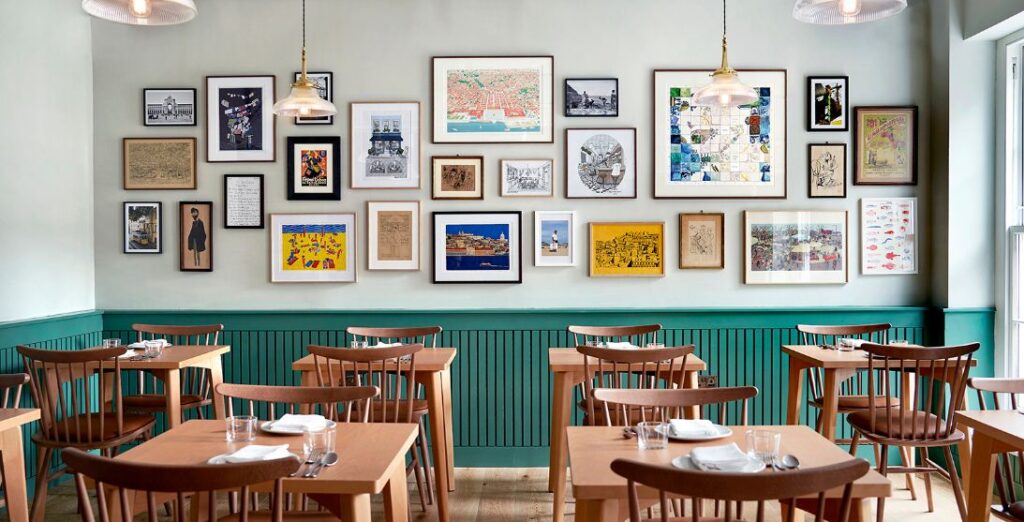
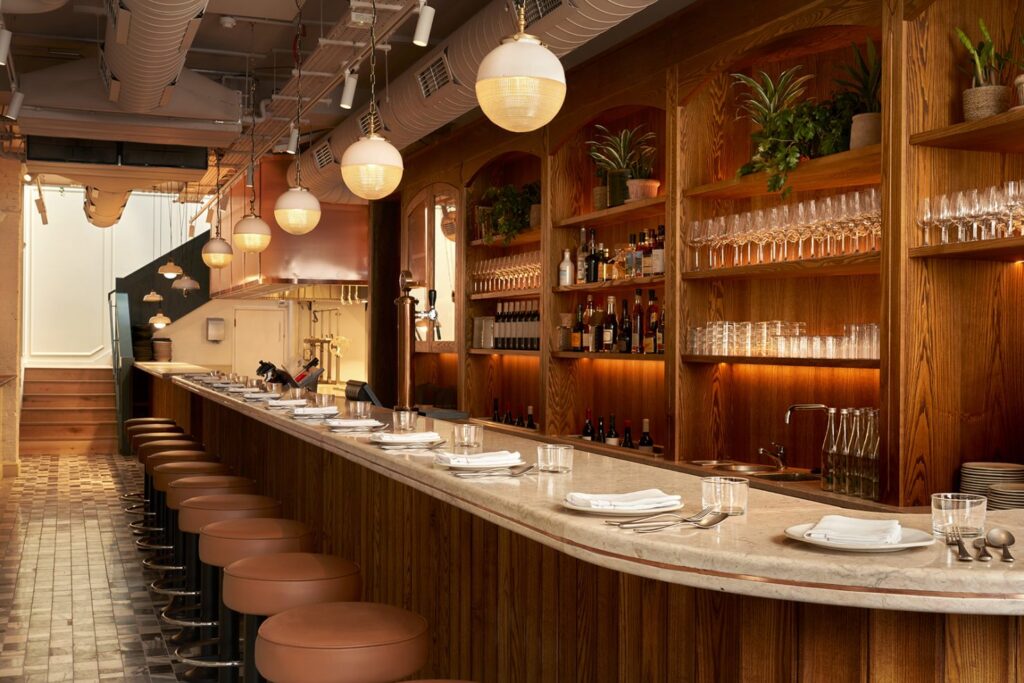
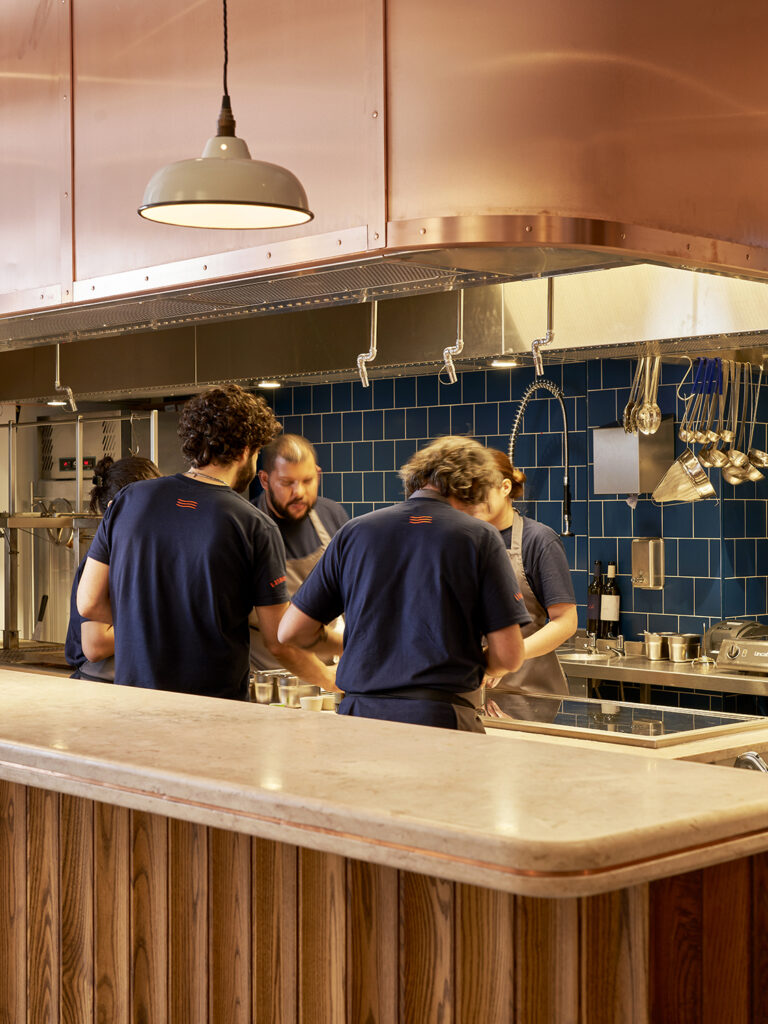
The Portuguese restaurant takes over a three-storey townhouse on Charlotte Street. Mendes tasked his architect friend João Guedes Ramos with transforming its interiors. Whitewashed walls, exposed brick and green and blue colour pops set the tone, with Ramos conjuring the old spirit of the Portuguese capital’s traditional stores and cafes via dark wooden cabinetry, built in the style of an old pharmacy.
Photography: Lisbotea
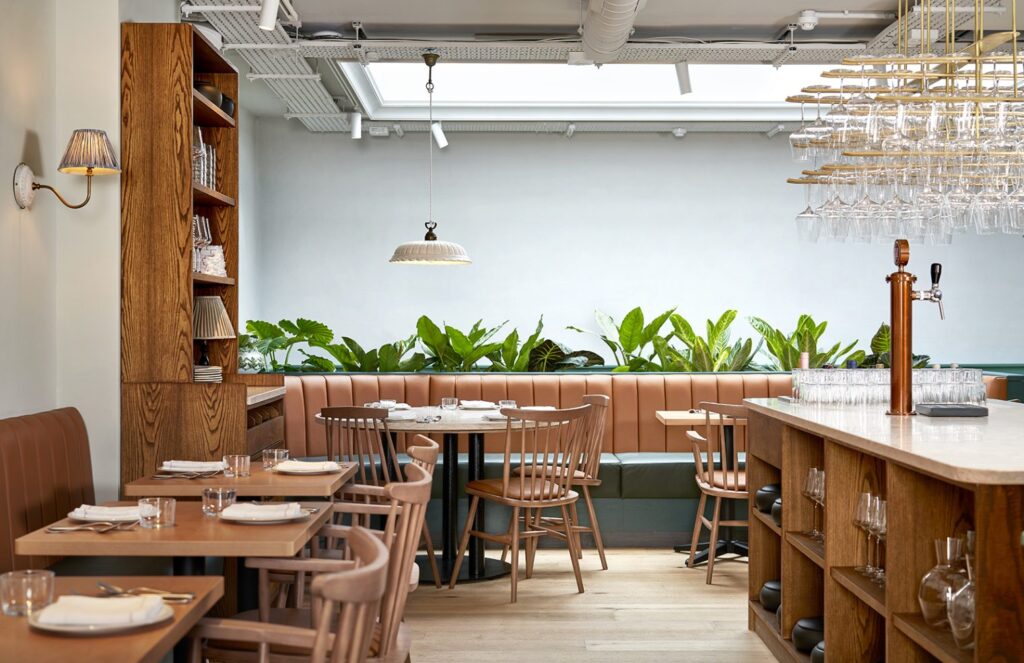
On the upper level is a whitewashed dining room crowned by a large skylight and views over the street through floor-to-ceiling windows. Portuguese materials have been used across the restaurant’s interiors, with Sintra limestone cut for the bar and cobblestone flooring, fabricated by masons in Lisbon, installed to evoke the city’s historic streetscape.
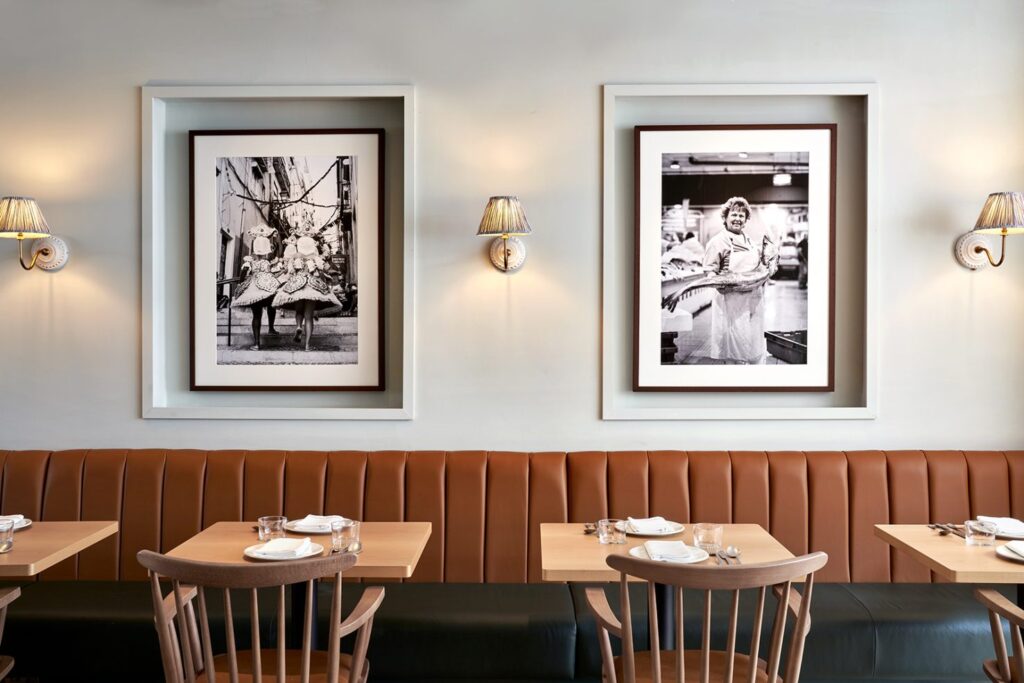
Mendes’ art collection adorns the walls – a mix of emerging and established Portuguese artists – and his menu evolves through the day, paying homage to the rhythm of dining in the Portuguese capital. Snacks and small plates include morcela sausage and scarlet prawn toast and spiced prawn rissois, with larger platters and sharing dishes such as carabineiro prawn and razor clam rice and chanfana lamb shoulder and red wine stew. Over 100 Portuguese wines, with a special focus on those produced around the Lisbon region, are available with the lower ground floor slated to open in April as a specialised ‘Adega’ or wine cellar.
Photography: Lisbotea
Photography: Lisbotea
Photography: Lisbotea
Photography: Lisbotea
13 Jul. 2022
Katsuya brings Japanese craft tradition to New York
Photography: Nikolas Koenig
It might be located in the heart of Manhattan, but this theatrical new sushi restaurant is deeply imbued with the design language of Japan.
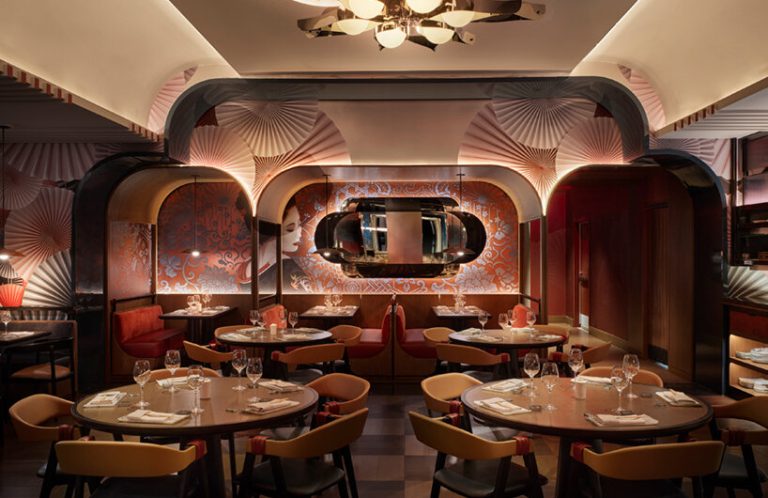
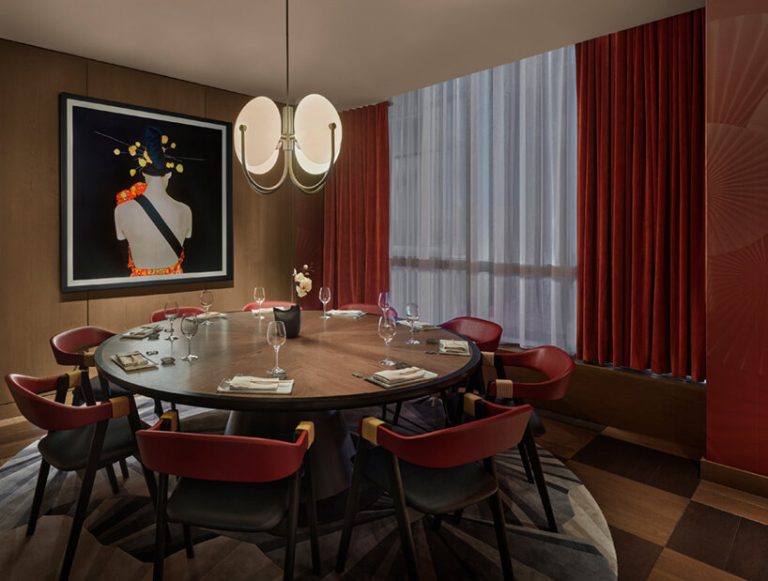
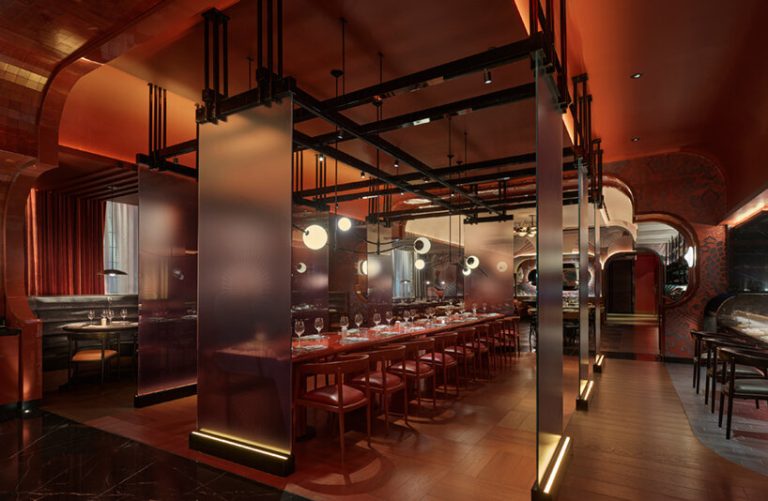
Rockwell Group created the interiors for Katsuya, which spans 7,000 sq ft inside the Five Manhattan West tower. The New York design studio opted for a dramatic approach to the restaurant’s interiors, filling its three dining areas (which can seat up to 305 guests) with colour, pattern and materials that wholeheartedly embrace Japanese tradition.
Photography: Nikolas Koenig
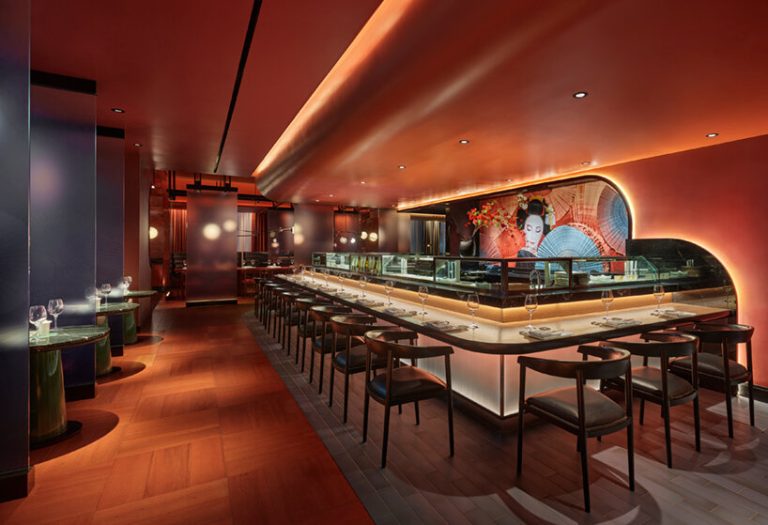
The deep red walls and glossy interiors of cut-out walls reference urushi lacquering, which is often applied to bowls and trays. Ombre glass panels have been installed in place of sliding paper screens, while the metal framework they’re hung from nods to the complex joins used in Japanese woodwork. Even the overhead lighting is wrapped in metal strips designed to remind diners of the brushstrokes of calligraphy.
Patterns resembling the pleats of parasols, and imagery of dancers holding fans emphasise the restaurant’s Japanese roots, and h has borrowed directly from historic wagara patterns, often used in kimonos, to further add to the maximalist feeling of the space.
Katsuya’s menu offers sushi and sashimi, as well as wagyu and tenderloin sizzling from the robata.
398 10th Ave, New York, NY 10001, United States
Photography: Nikolas Koenig
Photography: Nikolas Koenig
13 Jul. 2022
Milan’s burger bar pioneers the ‘swimming pool aesthetic’
Photography: Gregory Abbate
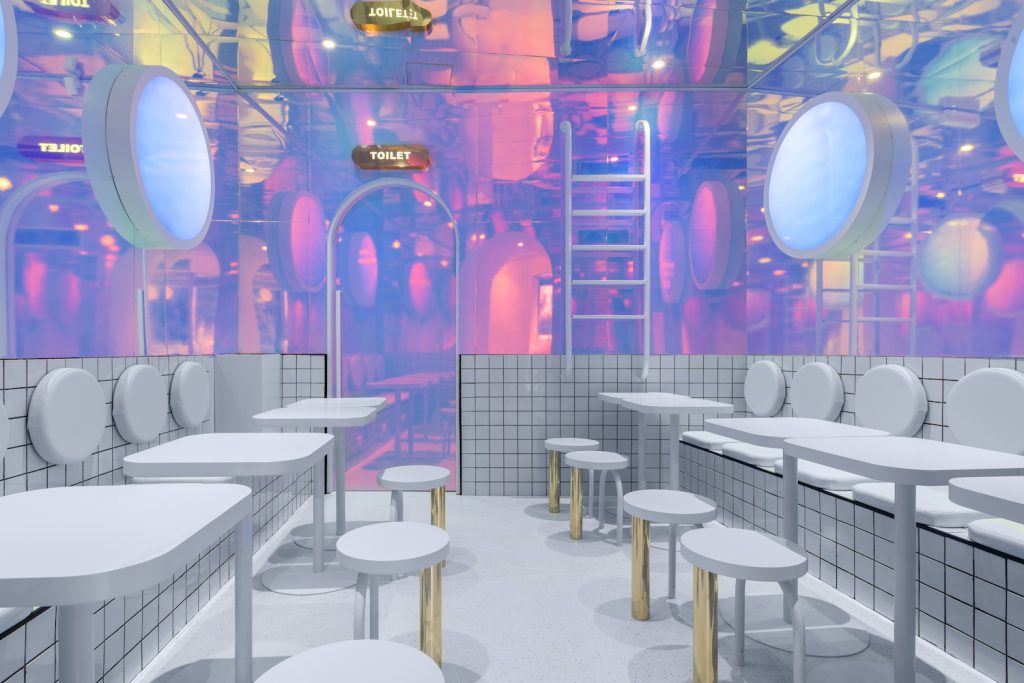
Masquespacio turned to swimming pool changing rooms as an unlikely source of inspiration for Milan’s pastel and iridescent Bun burger bar.
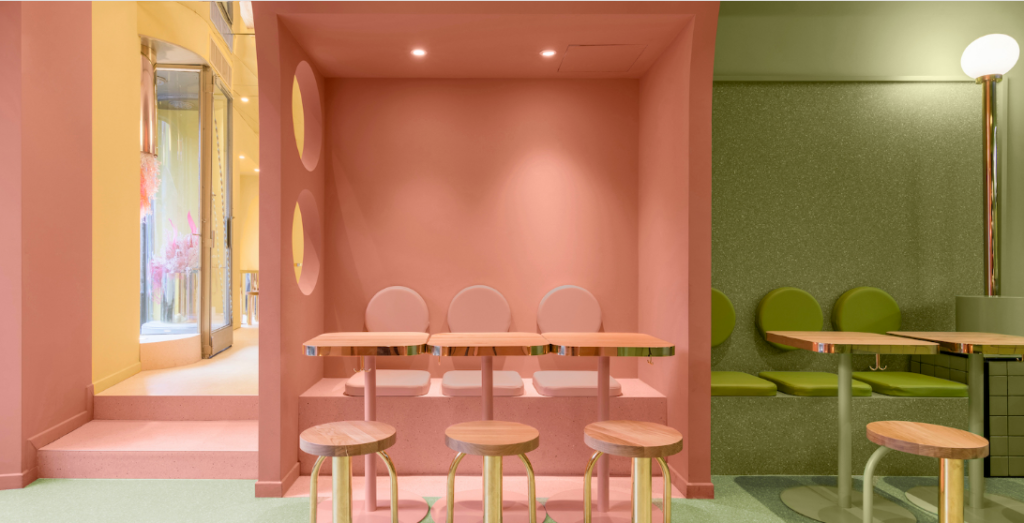
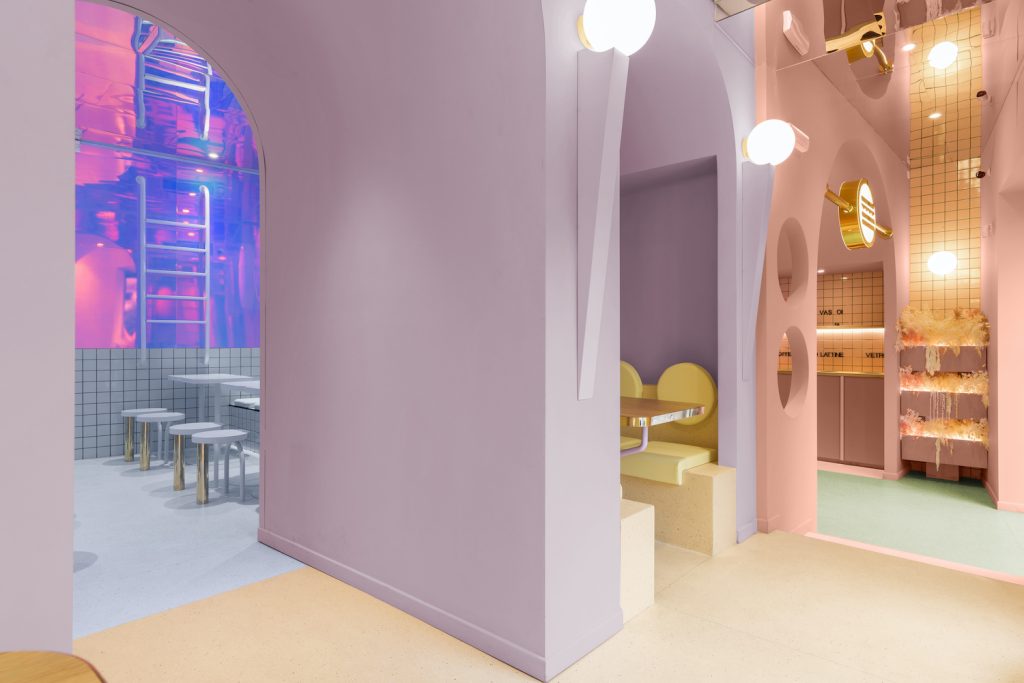
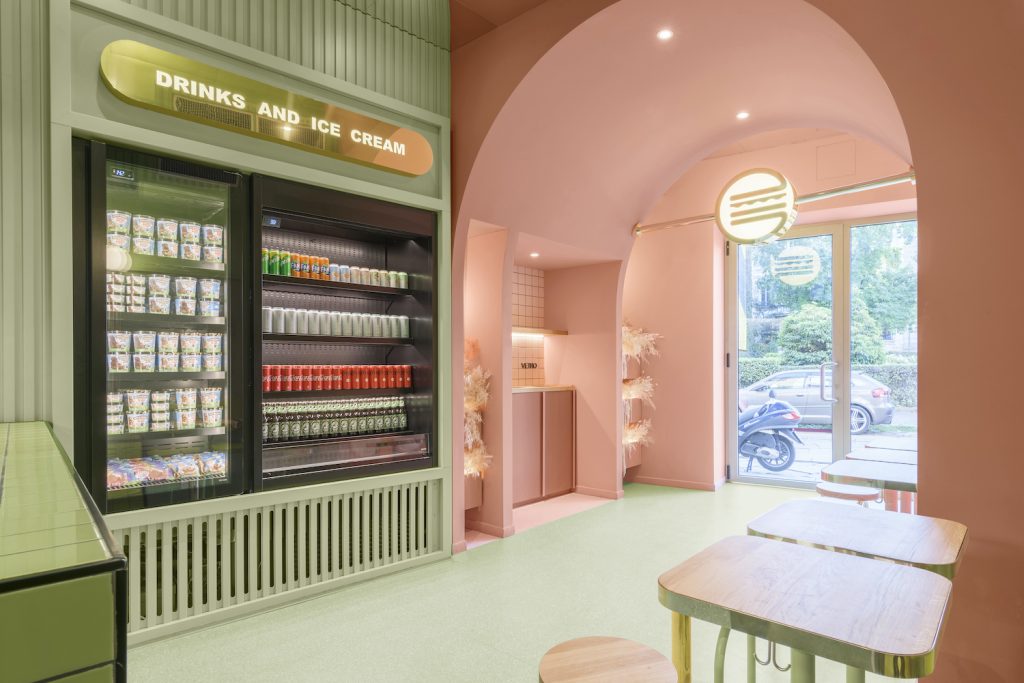
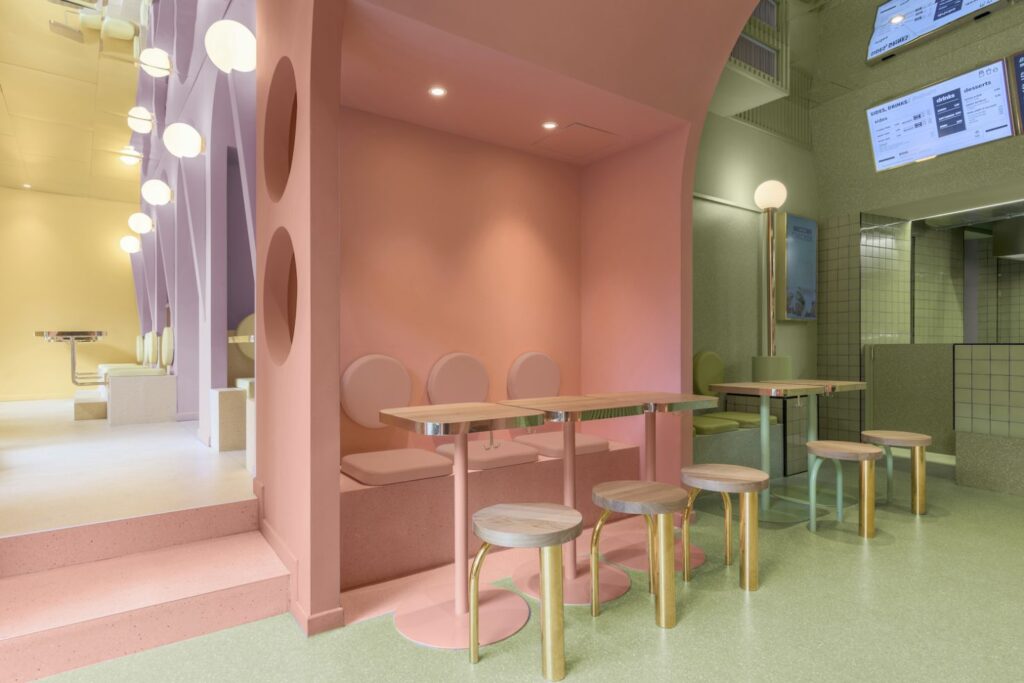
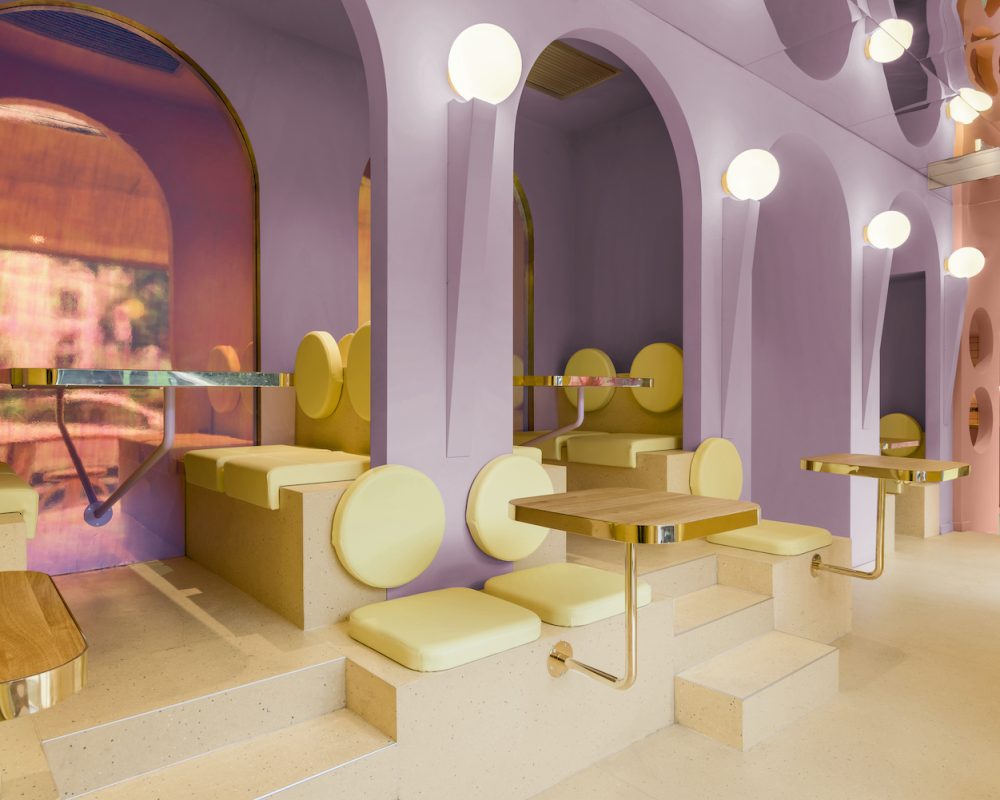
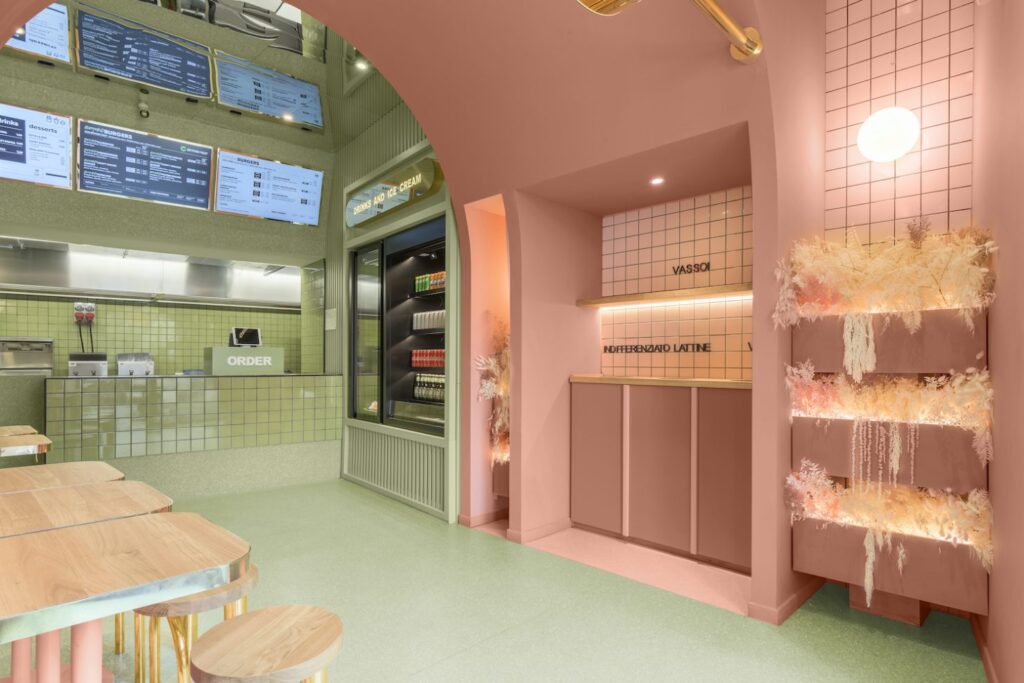
The Bun Burgers restaurant, which is located in the city’s Brera district, is colour-blocked throughout, with washes of yellow, pink, green and blue separating its various areas. Visitors order from the sage green counter and grab a seat in the pastel pink or lilac booths.
Photography: Gregory Abbate
Masquespacio’s approach to the Milan restaurant is whimsical, to say the least, with pink flowers spilling out of backlit planters and mirrored ceilings creating bendy reflections of the space. Cafe-style tables are attached to plinths, and round cushions line the walls of the bar’s booths.
The biggest surprise is through one of Bun’s lavender arches, which conceals a half-tiled dining room with porthole-style lights. Shimmering reflective walls and ceiling create the feeling of being underwater, while the swimming pool aesthetic is ramped up by a wall-mounted ladder. The result is playful – like dining in a David Hockney painting.
Photography: Gregory Abbate
Photography: Gregory Abbate
Photography: Gregory Abbate
13 Jul. 2022
Paris restaurant Mallory Gabsi channels the colours and textures of its menu
Photography: Arnaud Behzadi
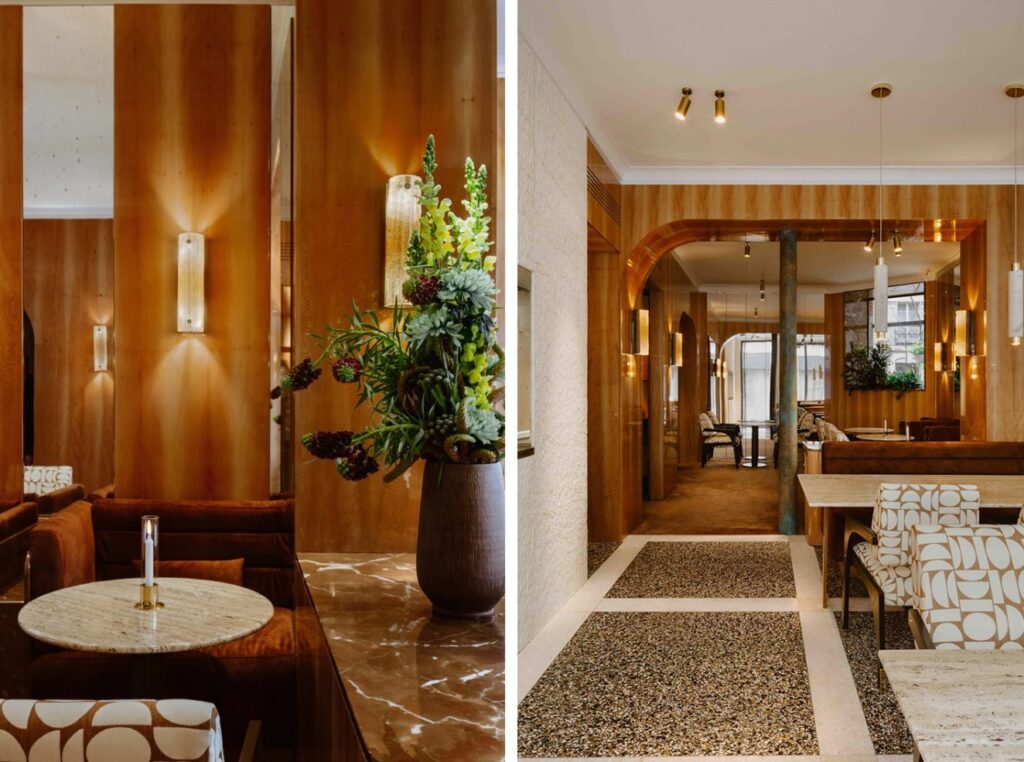
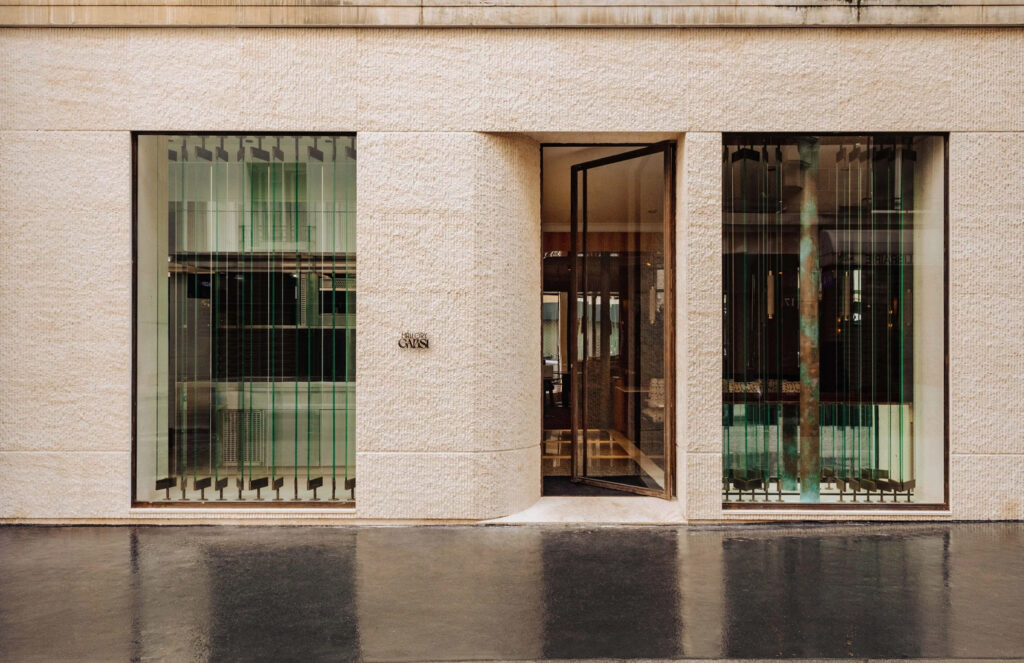
Arnaud Behzadi’s interiors are as carefully honed as the food at new Paris restaurant Mallory Gabsi.
At first sight, it looks as if Behzadi has adopted a minimal philosophy, using muted colours, clean lines and slick, polished materials.
Photography: Arnaud Behzadi
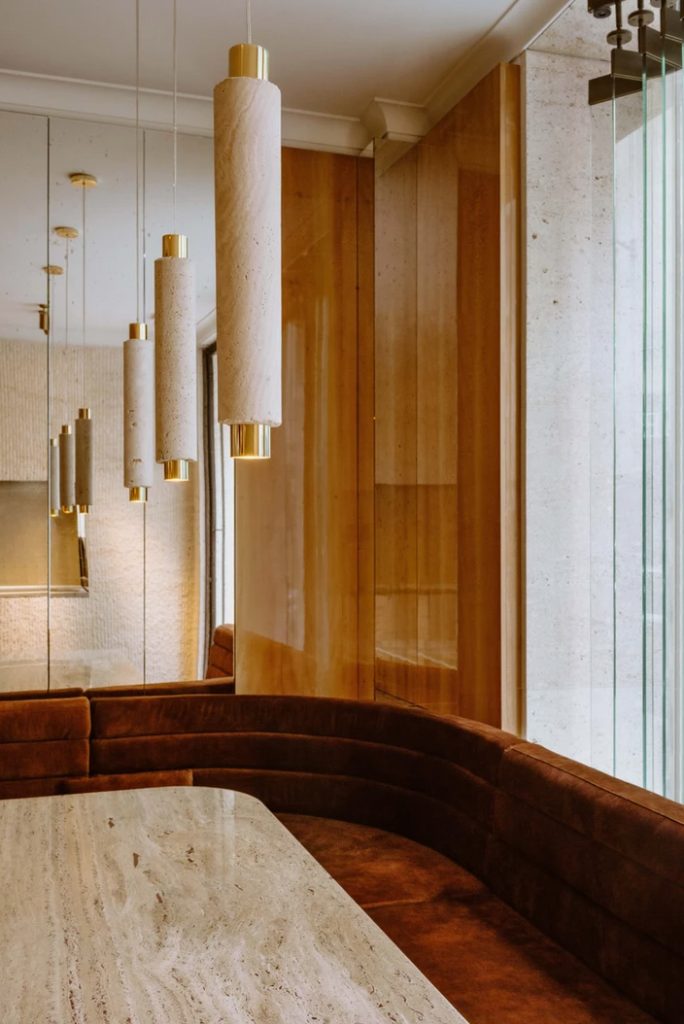
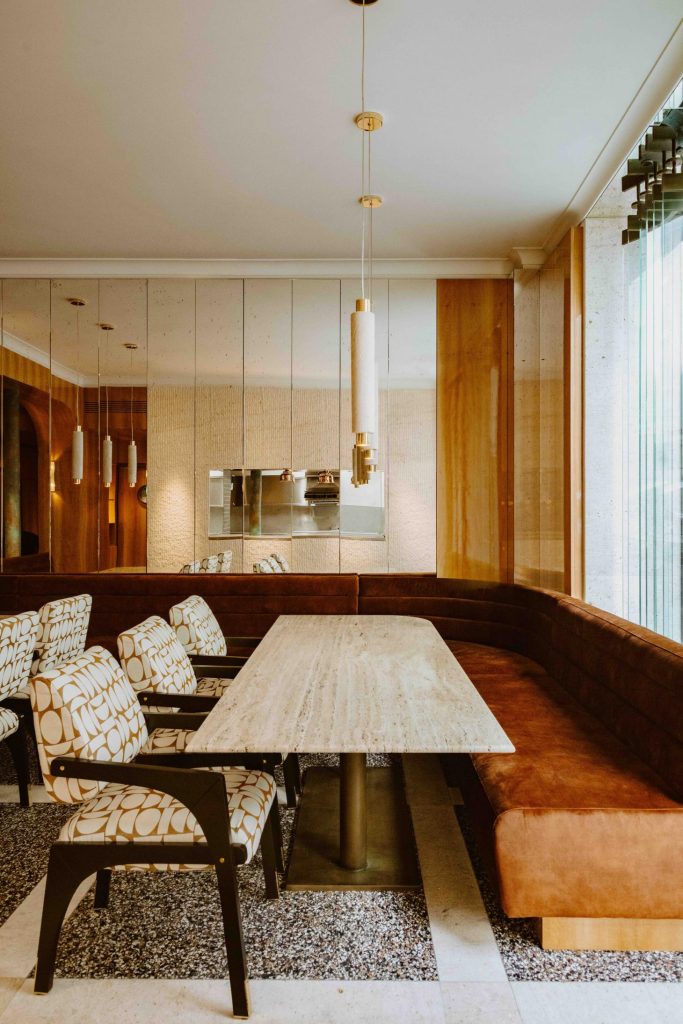
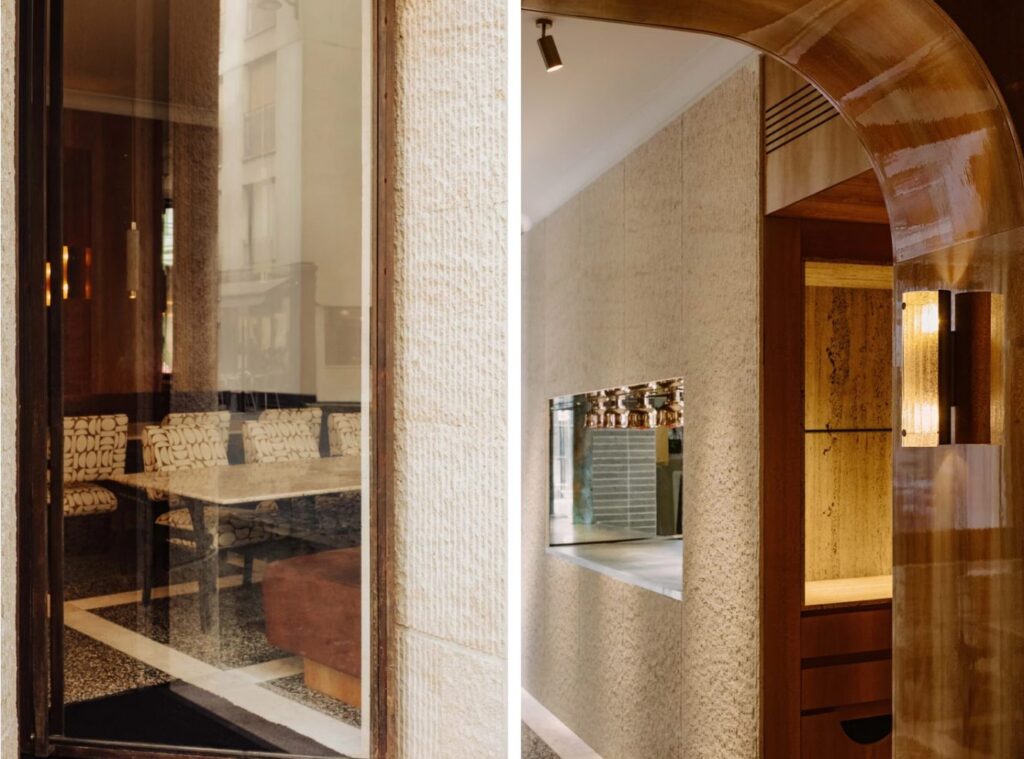
However a closer look reveals a carefully chosen palette of textures and shades. The amber-coloured banquette is a reference to saffron, a favourite ingredient in Mallory Gabsi’s dishes, while hints of turquoise nod to the chef’s preferred colour.
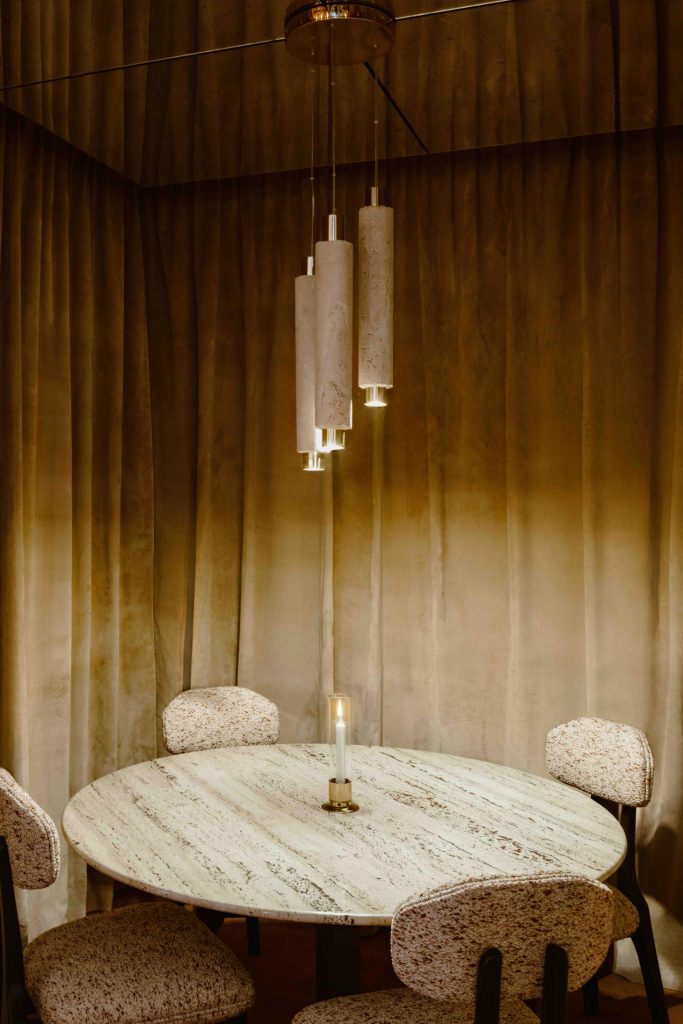
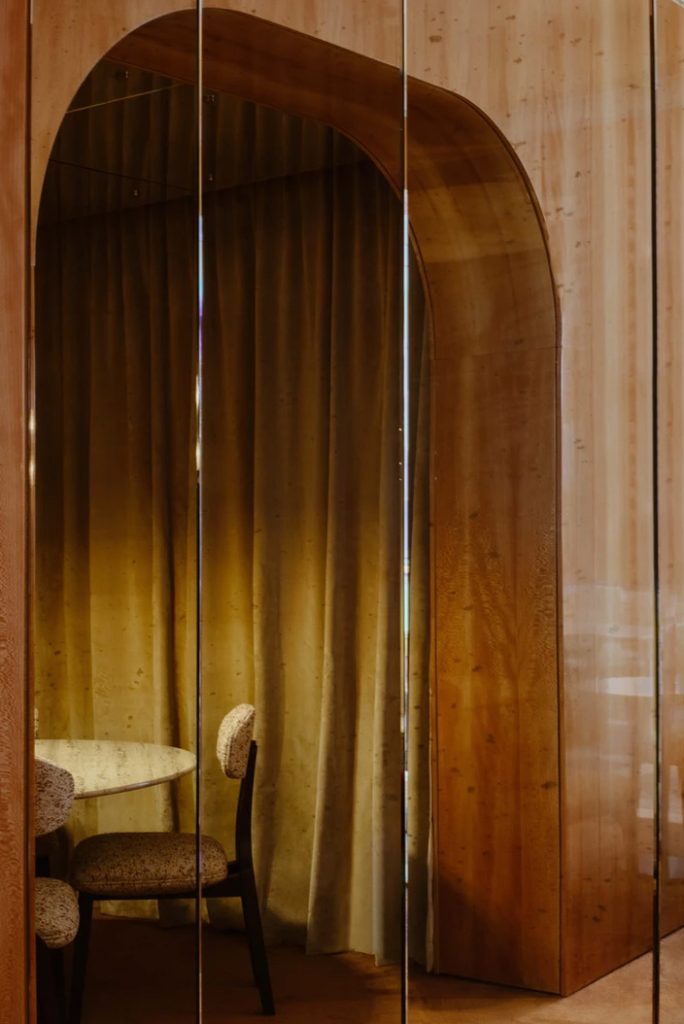
Behzadi has wrapped one cave-like niche in the restaurant in velvet curtains, adding a mirrored ceiling and white marble dining furniture to offset the enclosed space.
Photography: Arnaud Behzadi
Geometric-patterned dining chairs, speckled stone floors and oxidised metal columns all add dimensionality to the interiors. It’s emphasised by mirrored walls and glossy wood panelling – which hint at some more vintage inspiration for the restaurant.
Mallory Gabsi’s menu is a similar story of contrasts, with unexpected flavour combinations including chocolate and parsnip.
Photography: Arnaud Behzadi
13 Jul. 2022
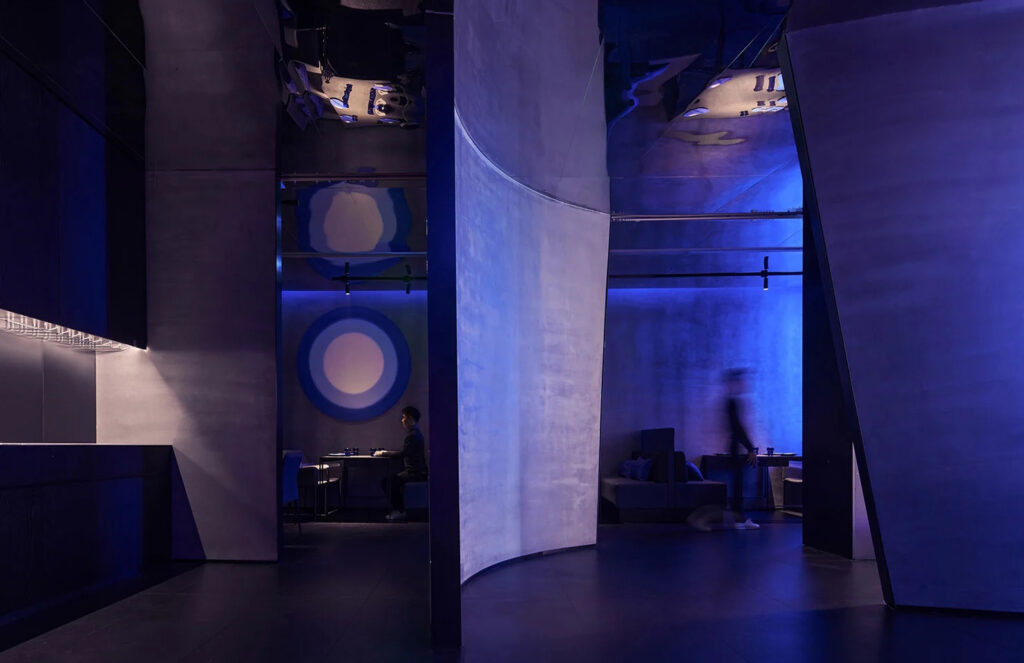
Shanghai’s dreamlike Taste of Dadong restaurant is bathed in blue
Photography: yuuuunstudio
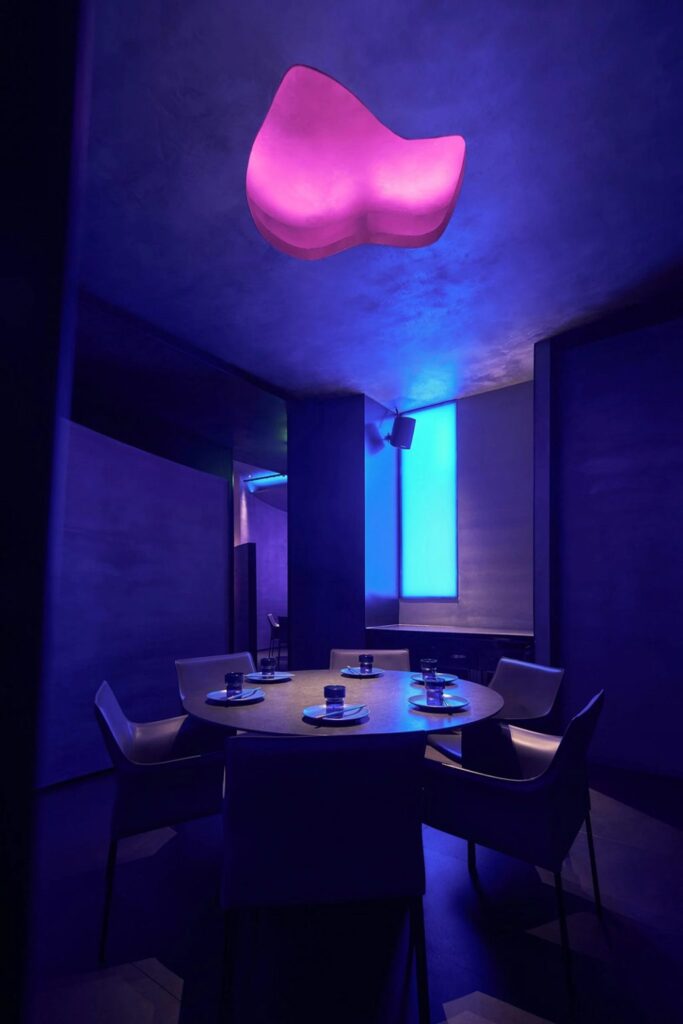
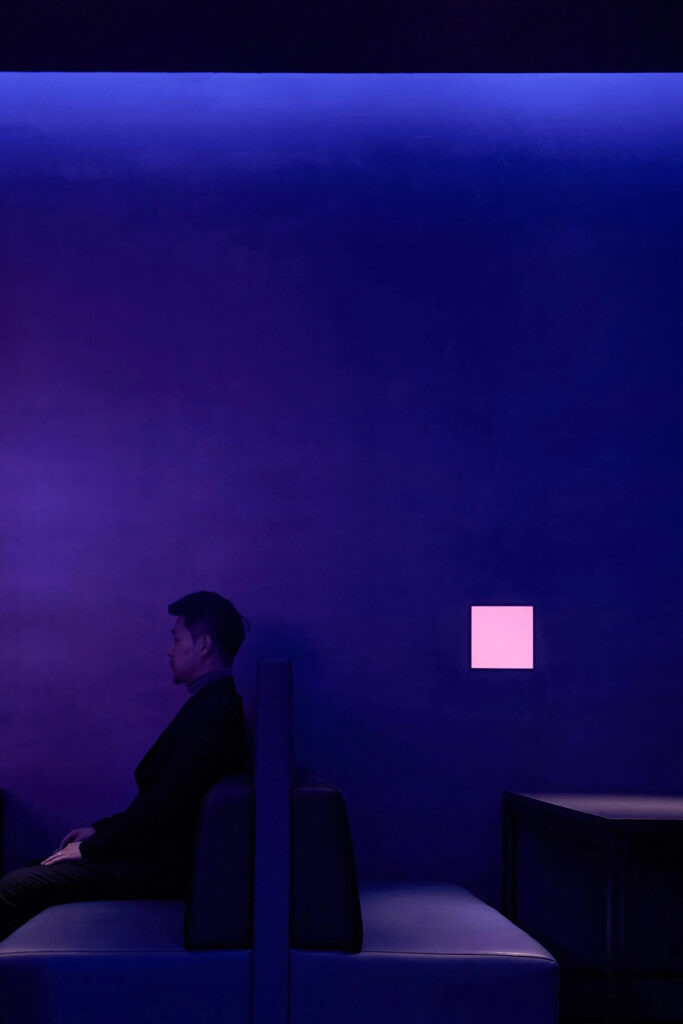
Diners enjoy a trippy experience at this Shanghai restaurant, which creates an underwater atmosphere by cocooning guests in blue light.
Chinese firm AD Architecture designed the interiors of Taste of Dadong, which is steeped in shades of deep purple, indigo and neon blue – set off by flashes of fuschia.
Photography: yuuuunstudio
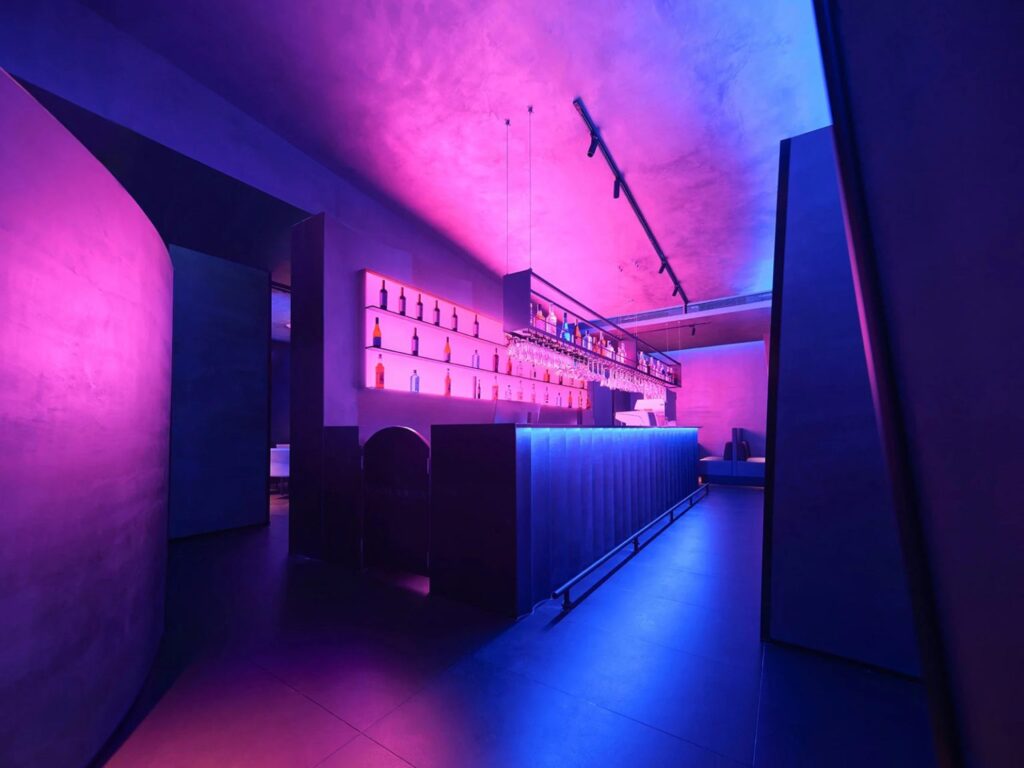
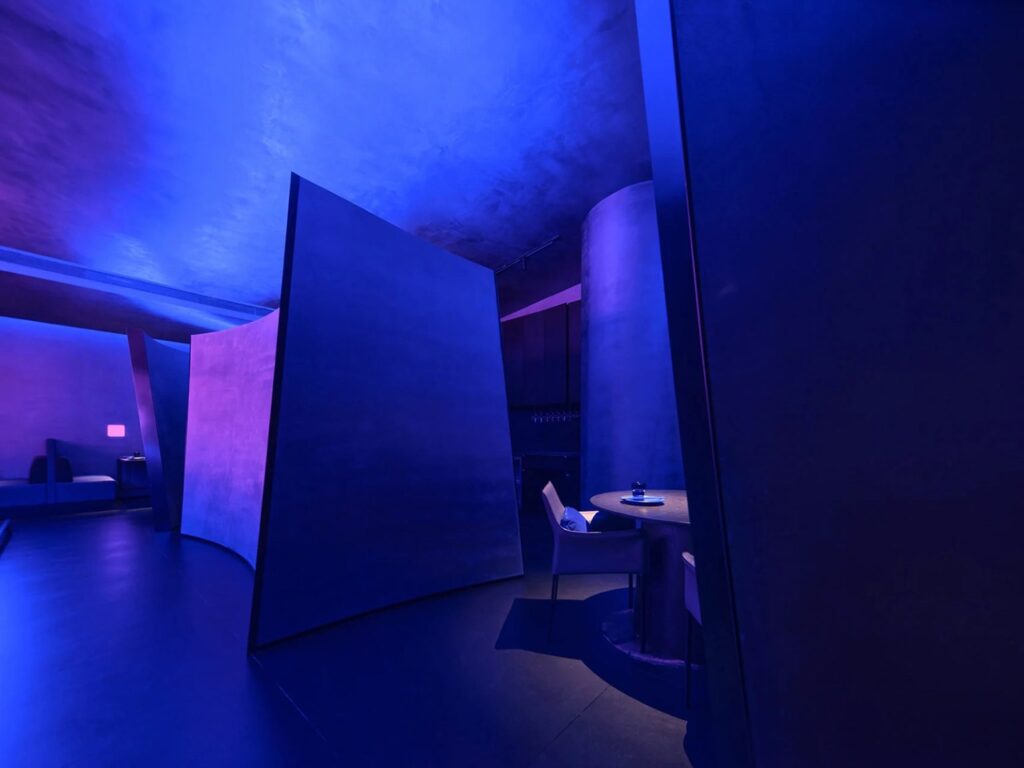
The dramatic neon lighting emphasises the equally dramatic floor plan, with huge, curving partitions shielding dining areas and lending the entire restaurant a vaguely brutalist feel. Gradients of colour play across these vast internal walls, as well as the ceiling.
To add to the dream-like experience, AD Architecture has installed mirrored panels overheard, which create funfair-esque reflections of guests. Thankfully, the bar is still easy to find, signposted by a wash of neon pink lighting.
Photography: yuuuunstudio
Photography: yuuuunstudio
Photography: yuuuunstudio
- 1
- 2